
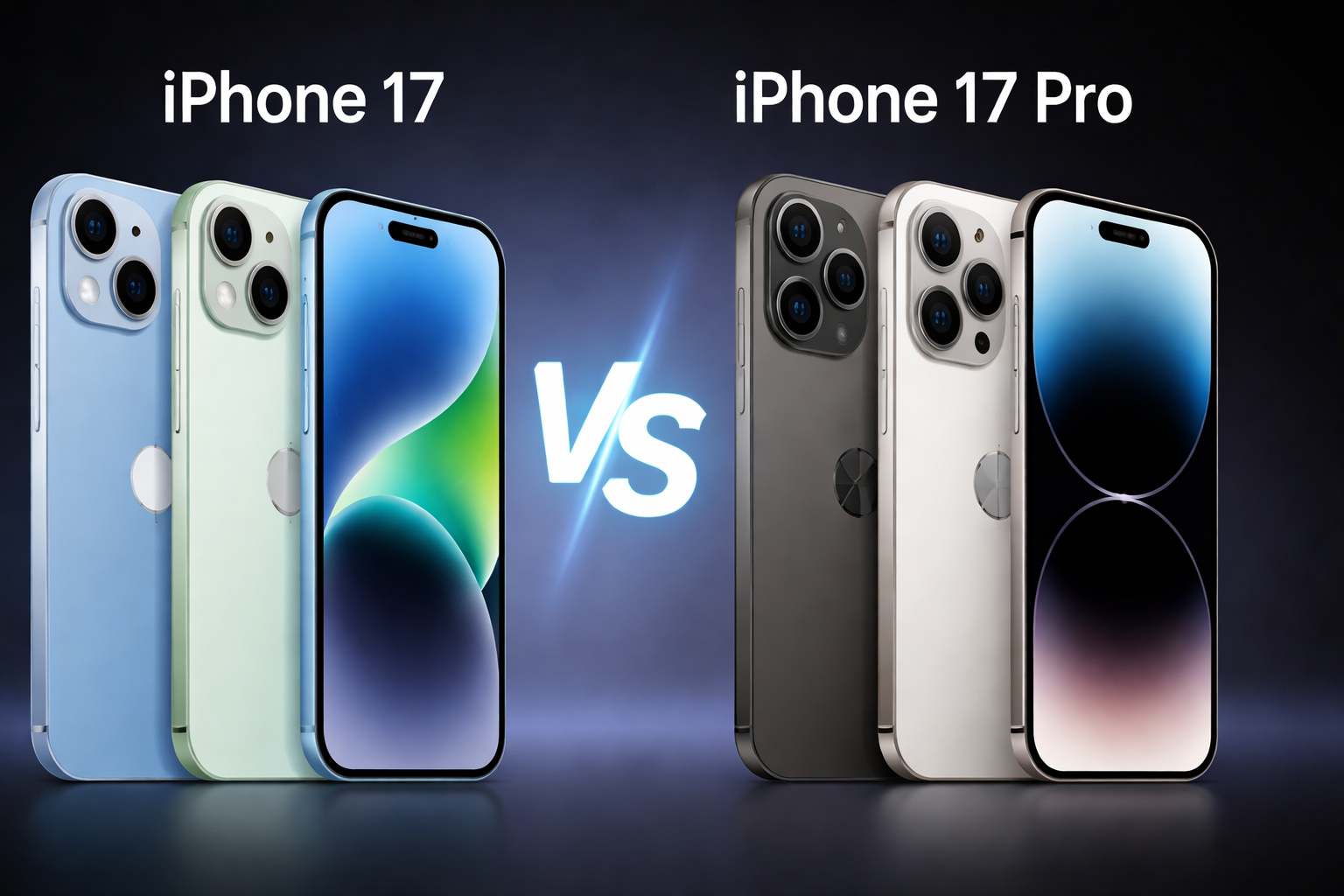
Choosing between the iPhone 17 vs iPhone 17 Pro isn’t just about picking the newer or more expensive device. For many buyers, the real question is whether the “Pro” label actually changes everyday use — or if the standard model already does everything they need.
Apple’s yearly lineup has gradually widened the gap between its regular and Pro phones. What once felt like small camera upgrades now touches performance, display technology, materials, and even how the phone feels during daily use. Understanding those differences matters more than ever, especially as prices continue to climb.
Below is a practical, real-world comparison focused on how these phones differ — not just on paper, but in how they fit into different lifestyles.
Design and Build Quality: Subtle Changes That Matter Over Time
At first glance, the iPhone 17 and iPhone 17 Pro will likely look nearly identical. Apple rarely redesigns both tiers dramatically in the same year. The differences usually reveal themselves after a few days of handling the device.
The standard iPhone 17 is expected to keep an aluminum frame paired with a glass back. It’s lightweight, comfortable, and familiar — the kind of phone most users immediately adjust to.
The Pro model typically shifts to more premium materials, such as titanium or advanced alloys. That change isn’t purely cosmetic. A stronger frame often means improved durability and slightly better weight distribution, especially noticeable during long usage sessions.
In daily life, this translates into small but meaningful distinctions:
- The Pro model may feel denser and more refined in hand.
- The regular model often feels lighter and less fatiguing for casual use.
- Scratches and wear tend to show differently depending on the finish.
Neither approach is objectively better; it depends on whether you prioritize comfort or a more premium physical feel.
Display Technology: Smoothness vs Practicality
One of the most consistent dividing lines in recent iPhone generations has been the display.
Refresh Rate Differences
The iPhone 17 is expected to feature a high-quality OLED display with a standard refresh rate. For most users, scrolling social media, watching videos, and browsing the web already feel smooth.
The iPhone 17 Pro, however, traditionally includes a higher adaptive refresh rate display. This allows the screen to dynamically adjust depending on what you’re doing — smoother animations while scrolling, but lower refresh rates when viewing static content to save battery.
The difference becomes noticeable in specific situations:
- Fast scrolling through long feeds
- Gaming
- Switching between apps quickly
- Using gesture navigation frequently
If you’ve never used a high-refresh display, the standard model won’t feel lacking. But once accustomed to smoother motion, returning to a standard panel can feel slightly less fluid.
Always-On Features
Pro models often include advanced display behaviors like always-on information visibility. For people who frequently check notifications or time without unlocking their phone, this becomes surprisingly useful over months of use.
Performance and Chipset: Power You May or May Not Need
Apple typically reserves its newest, most powerful chip for Pro devices first, while the standard model receives a slightly modified or previous-generation variant.
In real-world terms, both phones will feel extremely fast.
Opening apps, editing photos, messaging, or streaming content won’t challenge either device. The differences appear in heavier workloads:
- High-end mobile gaming
- Video editing
- Multitasking with demanding apps
- Long-term software performance years down the line
The Pro model’s extra graphics power and processing headroom mostly benefit users who push their phones regularly. For casual users, that additional performance may remain largely unused.
An important practical observation: performance advantages often matter more after two or three years rather than on day one. The Pro model may age slightly better as apps become more demanding.
Camera Systems: Where the Gap Widens Most
Camera capability is usually the clearest distinction between standard and Pro iPhones, and the iPhone 17 lineup is expected to continue that trend.
Standard iPhone 17 Camera Experience
The base model typically includes a dual-camera system designed for reliability rather than experimentation. It excels at:
- Everyday photography
- Social media photos
- Portrait shots
- Night photography improvements through software processing
For most people, this already exceeds what they realistically need.
iPhone 17 Pro Camera System
The Pro model usually adds an additional telephoto lens along with enhanced sensor technology. This changes how you can capture moments rather than simply improving quality.
Key advantages often include:
- Optical zoom without quality loss
- Better low-light detail
- Advanced portrait depth control
- Professional video recording features
The difference becomes obvious during travel, events, or wildlife photography. Being able to zoom naturally without stepping closer changes how you frame photos.
Many users don’t realize how valuable telephoto zoom is until they start using it regularly.
Video Recording and Creator Features
Apple increasingly designs Pro models with creators in mind.
The iPhone 17 Pro is expected to offer expanded video tools such as advanced stabilization, higher recording formats, or professional color workflows. These features matter for:
- Content creators
- YouTubers
- Mobile filmmakers
- Social media professionals
The standard iPhone 17 will still record excellent video — likely among the best in its class — but without the deeper manual controls or specialized recording formats.
For someone recording family memories or casual clips, the difference may never matter. For creators, it can replace dedicated equipment.
Battery Life and Efficiency
Battery performance isn’t only about size; it’s about efficiency and software optimization.
Historically, Pro models sometimes last longer despite having more powerful hardware because adaptive display technology reduces power usage during idle moments.
However, real-life usage patterns change outcomes:
- The standard model may last longer for light users because it runs fewer power-intensive features.
- The Pro model may outperform during mixed usage thanks to smarter refresh-rate adjustments.
Heavy camera or gaming use typically favors the Pro due to better thermal management.
Storage Options and Practical Considerations
Another quiet difference often appears in storage configurations.
The Pro model usually starts with higher storage tiers or offers larger maximum capacities. This matters more today than it did a few years ago because:
- Photos and videos consume more space
- Apps are larger
- Offline media libraries are common
If you rarely manage storage or rely heavily on cloud backups, the standard model works perfectly. But users recording lots of video often benefit from higher storage ceilings available in Pro versions.
Price vs Value: The Real Decision Point
The biggest difference between the iPhone 17 and iPhone 17 Pro isn’t technical — it’s philosophical.
The standard model focuses on delivering a complete flagship experience without extras most people won’t use daily. It’s balanced, capable, and usually the smarter financial choice for average users.
The Pro model targets people who notice details:
- smoother motion
- camera flexibility
- premium materials
- extended performance longevity
Interestingly, many buyers choose the Pro not because they need its features today, but because they plan to keep the phone longer.
When viewed over three to four years, the price difference sometimes feels smaller than expected.
Who Should Choose the iPhone 17?
The regular iPhone 17 makes the most sense if you:
- Mostly use your phone for messaging, browsing, streaming, and photos
- Prefer a lighter device
- Don’t care about zoom photography
- Upgrade every two to three years
- Want flagship reliability without paying for niche features
For many people, this will quietly be the better choice.
Who Should Choose the iPhone 17 Pro?
The Pro model fits users who:
- Take photography seriously
- Record video frequently
- Play graphics-intensive games
- Value smoother displays
- Plan to keep their phone for several years
It’s less about luxury and more about flexibility. The extra tools simply give you more ways to use the device.
Everyday Experience: The Difference You Feel After Months
What’s interesting about comparing the iPhone 17 vs iPhone 17 Pro is that the gap doesn’t always appear immediately.
During the first week, both phones feel equally fast and capable.
After several months, small differences begin to stand out:
- smoother scrolling becomes noticeable
- zoom photography becomes habit-forming
- premium materials age differently
- performance headroom reduces slowdowns over time
These aren’t dramatic changes — but they accumulate.
That’s why some users never feel the need to upgrade early when using a Pro model, while standard-model owners may feel ready for an upgrade slightly sooner.
FAQ: iPhone 17 vs iPhone 17 Pro
Is the iPhone 17 Pro faster than the iPhone 17 in daily use?
For basic tasks, both feel equally fast. The Pro shows advantages mainly in gaming, heavy multitasking, and long-term performance after years of updates.
Does the Pro camera really make a big difference?
Yes, mainly because of optical zoom and advanced shooting options. Casual photos look similar, but flexibility increases significantly on the Pro.
Is the higher refresh rate noticeable?
Most people notice smoother scrolling after a few days. It’s subtle at first but becomes hard to ignore once you’re used to it.
Which model has better battery life?
It depends on usage. Light users may see similar results, while mixed or heavy users often benefit from the Pro’s adaptive display efficiency.
Is the Pro worth the extra money?
It’s worth it if you’ll use the camera and performance advantages or plan to keep the phone longer. Otherwise, the standard model already covers most needs.
Will the iPhone 17 feel outdated compared to the Pro?
Not anytime soon. Apple designs both models to remain capable for years, though the Pro may age slightly more gracefully under demanding workloads.
Choosing between the iPhone 17 and iPhone 17 Pro ultimately comes down to how you use your phone rather than which device is objectively better. One prioritizes balance and practicality; the other expands what a smartphone can do when you push it further. The right choice is simply the one that aligns with how your phone fits into your daily life.
