
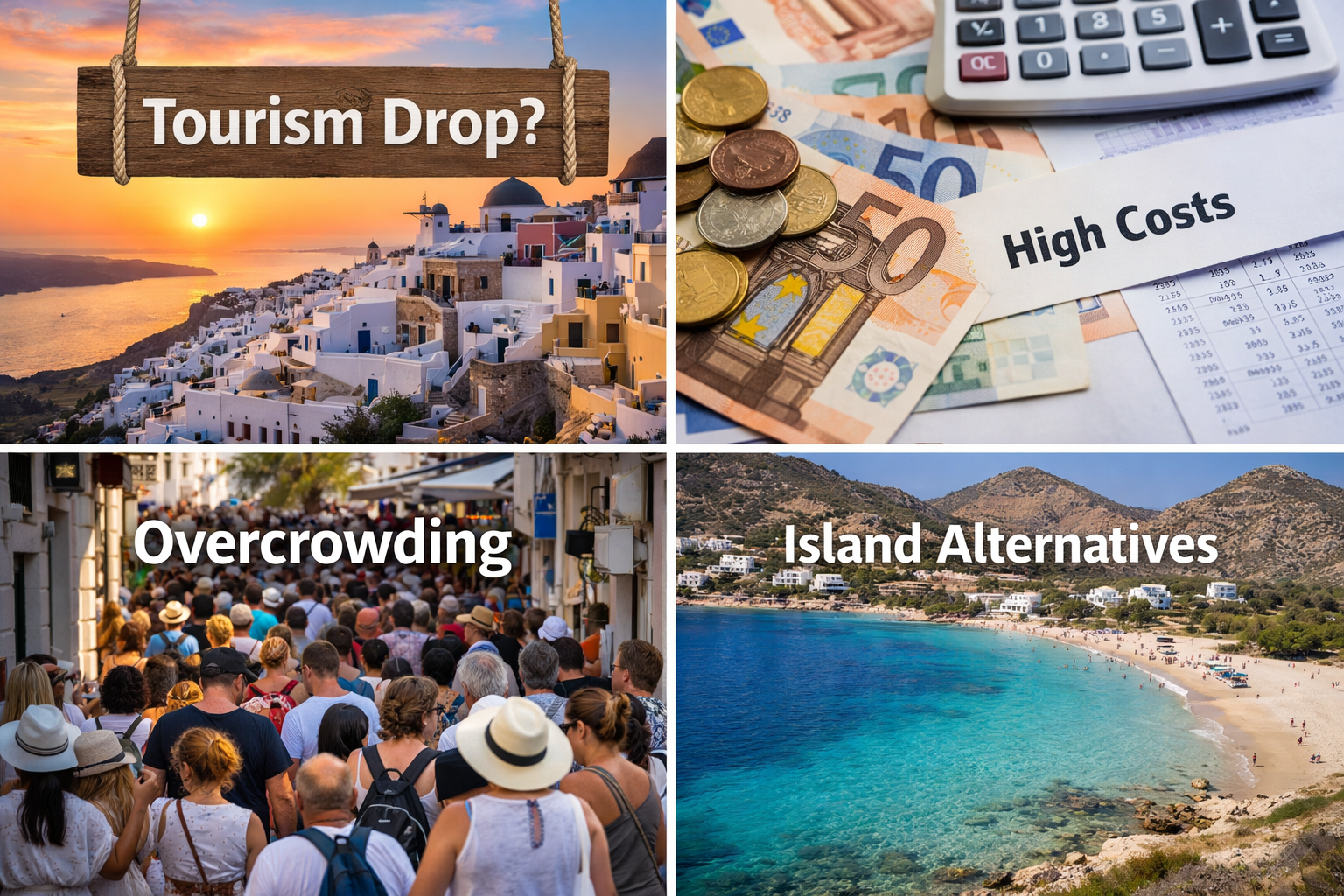
The Santorini Mykonos tourism drop has become a noticeable topic across travel circles, especially over the past couple of seasons. Once seen as almost immune to fluctuations, these iconic Greek islands are now experiencing a softer demand in certain periods. The change isn’t sudden or dramatic, but it’s enough to raise questions about shifting travel behavior, costs, and evolving expectations among tourists.
What is Santorini Mykonos Tourism Drop
The Santorini Mykonos tourism drop refers to a measurable decline or slowdown in visitor numbers, bookings, or tourism spending in Santorini and Mykonos compared to previous peak years.
It doesn’t mean tourism has stopped. Instead, it highlights reduced growth, shorter stays, or a shift toward alternative destinations.
Background or History of Santorini Mykonos Tourism Trends
For years, Santorini and Mykonos represented the peak of Mediterranean travel. White-washed buildings, sunset views, and beach nightlife made them global icons.
Before the pandemic, both islands saw record-breaking visitor numbers. Luxury tourism, cruise arrivals, and social media exposure pushed demand to extremely high levels.
After travel resumed globally, there was an initial surge—often called “revenge travel.” However, as that wave settled, patterns began to normalize, and cracks in the growth trend started to appear.
How Santorini Mykonos Tourism Drop is Happening
The decline isn’t driven by a single cause. It’s a mix of economic, environmental, and behavioral factors.
Rising Travel Costs
Accommodation, food, and transport costs in Santorini and Mykonos have increased significantly. For many travelers, the price no longer matches perceived value.
Short-term rentals and luxury hotels dominate, leaving fewer mid-range options.
Overcrowding Concerns
Peak season congestion has become a serious issue. Narrow streets, packed viewpoints, and long wait times can reduce the overall experience.
Some travelers now actively avoid destinations known for overtourism.
Changing Travel Preferences
Modern travelers are exploring less crowded alternatives. Islands like Paros or Naxos, for example, offer similar scenery with fewer crowds and lower costs.
There is also a growing interest in slower, experience-based travel rather than fast-paced, photo-driven trips.
Environmental Pressure
Sustainability concerns are influencing decisions. Water shortages, waste management challenges, and infrastructure strain are increasingly discussed in relation to both islands.
Key Features or Important Details
Several patterns define the current tourism slowdown:
- Shorter stays: Visitors are spending fewer nights compared to earlier years
- Shift in demographics: Budget-conscious travelers are choosing alternatives
- Seasonal imbalance: Strong peak months but weaker shoulder seasons
- Reduced repeat visits: Many tourists see Santorini and Mykonos as “once-only” destinations
A notable detail is that high-end tourism remains relatively stable. Luxury travelers are less sensitive to price increases, so the decline is more visible in mid-range segments.
Advantages and Limitations
Advantages
- Less congestion during certain periods improves visitor experience
- Opportunity for sustainable tourism planning
- Local businesses can diversify offerings beyond mass tourism
- Higher quality tourism focus rather than volume
Limitations
- Economic pressure on local businesses reliant on steady tourist flow
- Seasonal income instability for workers
- Overdependence on tourism becomes more visible
- Potential decline in smaller businesses unable to adapt
The shift highlights how fragile tourism-driven economies can be when demand changes.
Real-World Use Cases or Traveler Perspective
From a traveler’s point of view, the tourism drop creates a mixed experience.
Some visitors report that Santorini feels more relaxed during off-peak months, making it easier to enjoy its famous caldera views without crowds.
In Mykonos, nightlife remains active, but fewer visitors mean slightly less intense crowds in clubs and beach parties.
Budget travelers, however, often still find both islands expensive, even with reduced demand. This pushes them toward alternative Greek destinations that offer similar charm at a lower cost.
Travel agencies have also started adjusting packages, offering shorter stays or combining these islands with lesser-known locations.
Is Santorini Mykonos Tourism Drop Safe, Legitimate, or Trustworthy?
Yes, the tourism drop is a legitimate and observable trend, supported by travel industry data and local business reports.
It is important to understand that this is not a collapse. Both Santorini and Mykonos remain among the most visited destinations in Greece.
The term “drop” often reflects slower growth or slight decline, not a disappearance of tourists.
Travelers can still expect fully operational services, hotels, and attractions.
Important Things to Know Before Visiting Santorini or Mykonos
Timing Matters
Visiting during shoulder seasons (April–June or September–October) often provides better value and fewer crowds.
Budget Planning is Essential
Even with a tourism dip, prices remain relatively high. Booking in advance can help manage costs.
Expect Premium Pricing
Santorini and Mykonos are positioned as luxury destinations. Even basic services may cost more than in other parts of Greece.
Consider Alternatives
Nearby islands can offer similar landscapes with a quieter atmosphere and lower expenses.
Sustainability Awareness
Visitors are increasingly encouraged to respect local resources, especially water usage and waste disposal.
Common Questions About Santorini Mykonos Tourism Drop
Is tourism really declining in Santorini and Mykonos?
Tourism is not disappearing, but growth has slowed and certain segments—especially mid-range travelers—are declining. Peak seasons still attract large crowds.
Why are fewer tourists visiting these islands?
High costs, overcrowding, and changing travel preferences are the main reasons. Many travelers now seek quieter and more affordable destinations.
Are Santorini and Mykonos still worth visiting?
Yes, both islands remain visually stunning and culturally rich. However, expectations should align with pricing and seasonal crowd levels.
Is the tourism drop permanent?
It’s too early to say. Tourism trends often shift over time. Adjustments in pricing, infrastructure, and sustainability could influence future demand.
Which island is more affected, Santorini or Mykonos?
Both are experiencing changes, but impacts vary by season and traveler type. Santorini often sees more pressure from day tourists, while Mykonos is more nightlife-driven.
Will prices go down because of fewer tourists?
Prices may stabilize or slightly adjust, but significant reductions are unlikely due to high operating costs and strong luxury demand.
The Santorini Mykonos tourism drop reflects a broader shift in global travel behavior rather than a simple decline in popularity. These islands remain iconic, but travelers are becoming more selective, balancing cost, experience, and sustainability in ways that are reshaping even the most established destinations.
