
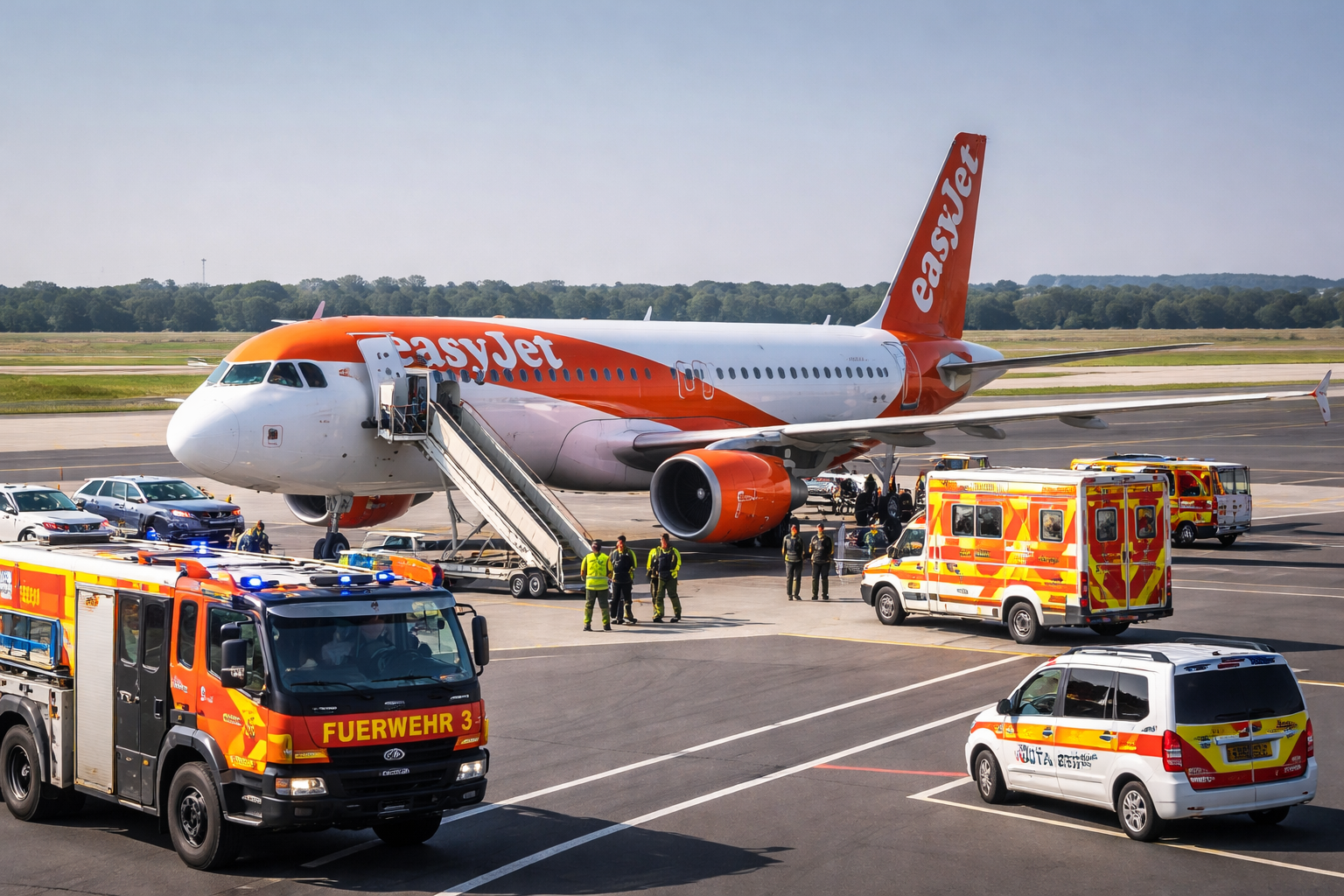
Emergencies in aviation always attract attention, whether from passengers, aviation enthusiasts, or the general public. One notable case occurred with EasyJet flight U22152 over Germany, which declared an emergency mid-flight in 2025. Understanding what happened and why it matters gives insight into airline safety protocols and passenger experiences during unexpected events.
The flight became part of aviation discussions when the crew issued an emergency signal while cruising over German airspace. This led to an unscheduled landing and triggered immediate responses from air traffic control and emergency services on the ground. Breaking down the incident helps explain the sequence of events, what declaring an emergency entails, and how passengers are affected.
Understanding an Emergency Declaration in Aviation
In aviation, pilots communicate emergencies through specific protocols. One standard is the 7700 transponder code, universally recognized as a signal that a flight is in urgent need of assistance. Setting this code does not automatically mean the aircraft is in imminent danger; it simply signals that the pilots need priority handling, possibly including diversion to the nearest suitable airport.
Emergency declarations are never taken lightly. Pilots are trained to assess the situation, follow operational procedures, and only use the emergency code when necessary. Once declared, air traffic controllers clear other traffic and provide guidance to ensure the flight reaches safety efficiently. In the case of U22152, the declaration ensured that the crew could manage the situation without unnecessary delays or complications.
Flight U22152: What Happened
On 15 August 2025, EasyJet flight U22152 departed from Istanbul, Turkey, en route to Manchester, UK. The aircraft, an Airbus A320, climbed to cruising altitude without reported issues initially. Approximately 90 minutes into the flight, while over Germany at around 11,000 meters (36,000 feet), the crew declared an emergency.
Air traffic control immediately cleared the aircraft for descent and directed it to Cologne/Bonn Airport, the nearest suitable landing location. The Airbus executed a controlled descent, dropping roughly 8,000 meters over 15 minutes, with no signs of abrupt maneuvers or loss of control. The situation was managed systematically, reflecting standard emergency diversion procedures.
Reason Behind the Emergency
Reports indicate that the emergency stemmed from a medical issue affecting the co-pilot, who became unable to perform duties during the flight. In such cases, pilots are trained to take full control, declare an emergency, and land at the closest appropriate airport. While technical failures or external threats can also trigger emergency actions, this situation was a health-related precaution.
Landing and Immediate Response
The aircraft landed safely at Cologne/Bonn, where emergency medical responders assisted the affected crew member. Passengers remained onboard briefly as authorities conducted standard procedures. Following the resolution of the emergency, EasyJet arranged for a replacement crew and conducted regulatory checks before the flight continued toward Manchester later that evening.
Emergency diversions, while unsettling, demonstrate the airline’s ability to handle unexpected situations while prioritizing safety over schedule.
How Airlines Manage Emergencies
Airlines are prepared for various contingencies that may require emergency actions:
- Medical Diversions: Emergencies involving passengers or crew, as in this case.
- Technical Problems: Engine warnings, pressurization issues, or system failures.
- External Factors: Severe weather, airspace restrictions, or other hazards.
Every emergency triggers a coordinated response between pilots, cabin crew, and ground controllers, ensuring that the situation is controlled and safe.
Passenger Rights and Experience
Unplanned diversions can disrupt travel plans, affect connections, and cause delays. Passengers traveling within EU airspace are protected under regulations that define rights in the event of delays, cancellations, or diversions. While compensation may not always apply for emergencies outside the airline’s control, passengers are entitled to assistance, including accommodation or rebooking if needed.
Understanding these rights and expectations can help travelers navigate the disruption more calmly and with realistic expectations.
Why the U22152 Incident Matters
The U22152 emergency illustrates the importance of preparedness and systematic responses in aviation. A medical incident affecting a crew member prompted a quick, coordinated reaction that prioritized safety without causing panic. For passengers and aviation observers, it highlights:
- How emergencies are communicated and handled mid-flight.
- The significance of pilot and crew health for safe operations.
- Passenger experiences during emergency diversions.
The case also demonstrates that declaring an emergency is a preventative safety measure rather than a signal of catastrophe.
Frequently Asked Questions
What does it mean when a flight sets the code 7700?
It signals a general emergency to air traffic control, ensuring the aircraft receives priority handling. It does not always indicate immediate danger to passengers.
Was the U22152 emergency caused by a mechanical failure?
No. Reports indicate the emergency was due to a medical issue affecting the co-pilot, not the aircraft systems.
Why did the flight divert to Cologne instead of returning to Istanbul or continuing to Manchester?
Air traffic control and the pilot choose the nearest suitable airport based on safety, fuel, weather, and airspace considerations. Cologne/Bonn was the optimal choice for a safe landing.
Are passengers compensated for emergency diversions?
Compensation depends on regulations and the nature of the emergency. Genuine emergencies are generally outside the airline’s control, but passengers still have rights to assistance.
How common are diversions due to crew health issues?
They are rare but do occur. Airlines train extensively for such scenarios to maintain operational safety.
Does an emergency declaration mean the flight is unsafe?
Not necessarily. Emergency declarations are precautionary measures to manage unexpected situations safely and efficiently.
