
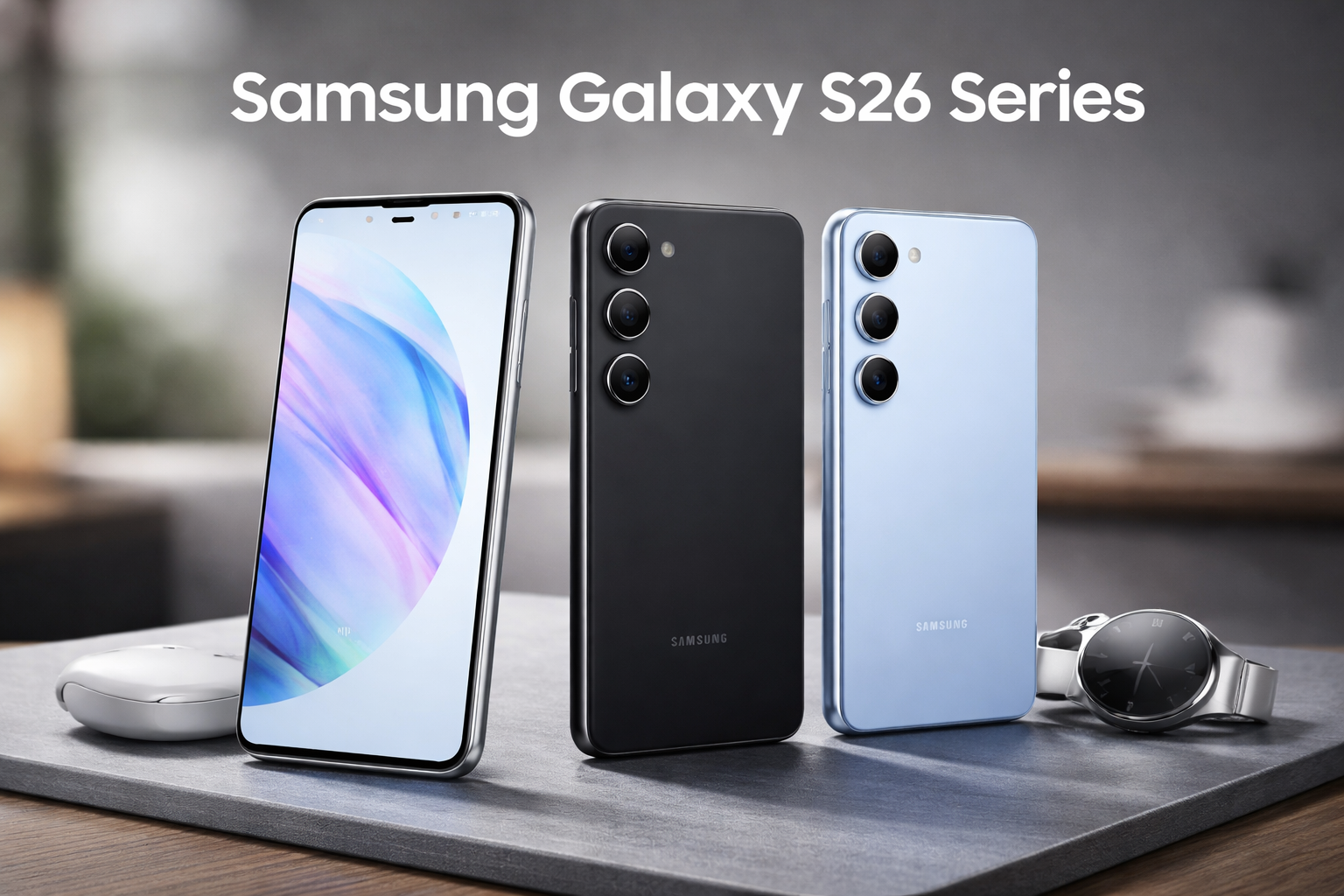
The Samsung Galaxy S26 series represents a familiar but meaningful evolution in flagship smartphones — not a dramatic reinvention, but a careful refinement of what already works. With each new generation, Samsung Electronics tends to focus less on flashy experimentation and more on improving the daily experience: performance that feels effortless, cameras that adapt naturally to real situations, and design choices that age well over time.
Early details and industry expectations suggest the Galaxy S26 lineup continues this approach. Rather than chasing novelty for its own sake, the series appears built around maturity — better efficiency, smarter software integration, and premium styling that feels intentional rather than decorative.
For users upgrading from devices two or three years old, these refinements may matter more than headline-grabbing specs.
A Design Language That Feels More Settled Than Experimental
Smartphone design has reached a stage where radical changes often create more problems than benefits. The Samsung Galaxy S26 series seems to acknowledge this reality.
Instead of redesigning everything, Samsung is expected to refine proportions, materials, and ergonomics. Slimmer bezels, slightly flatter edges, and improved weight distribution can subtly change how a phone feels during long use. These are details users notice after weeks — not minutes — of ownership.
Premium materials remain central. Armor-grade aluminum frames and strengthened glass panels are likely to continue, but durability improvements may focus more on scratch resistance and long-term wear rather than simple drop protection.
Color finishes are also becoming more restrained. Recent trends favor muted tones and matte textures that resist fingerprints and maintain a professional appearance. This shift reflects how smartphones increasingly function as everyday tools rather than fashion statements replaced every year.
Display Improvements That Focus on Comfort, Not Just Brightness
Samsung’s displays have long been among the industry’s strongest advantages, and the Galaxy S26 series is expected to push refinement rather than raw numbers.
High refresh rates are already standard, so the focus now turns toward adaptive efficiency. Smarter refresh scaling allows the display to conserve battery during static tasks while remaining fluid during gaming or scrolling.
Another expected improvement involves eye comfort. Advances in PWM dimming and blue-light management aim to reduce fatigue during extended usage — something users increasingly value as screen time grows across work and entertainment.
Outdoor visibility also matters more than peak brightness figures alone. Improved anti-reflective coatings could make the screen easier to read under harsh sunlight, an upgrade that feels practical rather than technical.
Performance: Real-World Speed Over Benchmark Competition
Every flagship launch promises faster processors, but real usability depends on sustained performance, not short bursts of speed.
The Samsung Galaxy S26 series will likely feature next-generation chipsets developed in collaboration with companies like Qualcomm, alongside Samsung’s own regional processor variants. The emphasis appears to be efficiency gains — maintaining performance without excessive heat or battery drain.
In practical terms, this means:
- Apps staying responsive after hours of use
- Better multitasking with large memory configurations
- Reduced throttling during gaming or video recording
Modern smartphones already feel fast; the difference now lies in consistency. A device that performs the same at 8 PM as it did in the morning feels genuinely premium.
AI-assisted processing is also expected to expand. Instead of cloud-dependent features, more on-device intelligence may handle tasks like photo enhancement, voice transcription, and predictive app behavior while maintaining privacy.
Camera Evolution: Computational Photography Matures
Camera upgrades rarely rely on megapixel increases anymore. The Samsung Galaxy S26 series is expected to emphasize computational improvements — how software interprets light, motion, and color.
Recent smartphone photography trends show a shift toward realism. Oversharpened images and exaggerated HDR effects are gradually being replaced by more natural color science. Users increasingly want photos that resemble what their eyes actually saw.
Possible areas of refinement include:
Improved Low-Light Consistency
Rather than dramatically brightening dark scenes, newer processing methods aim to preserve atmosphere while reducing noise.
Faster Motion Capture
Enhanced sensor readouts help freeze moving subjects — useful for sports, pets, or nighttime city scenes.
Video Stability and Dynamic Range
Smartphones now function as primary video cameras for many creators. Incremental improvements in stabilization and exposure balancing can make handheld footage look noticeably more professional.
Zoom capabilities are also expected to become more practical rather than extreme. Instead of pushing higher digital zoom numbers, manufacturers are focusing on clearer results within commonly used ranges.
Software Experience and Long-Term Support
Hardware attracts attention, but software determines how long a phone remains enjoyable to use.
Samsung’s interface has matured into a feature-rich ecosystem that prioritizes customization without overwhelming new users. The Galaxy S26 series is expected to deepen AI-assisted features that learn usage habits quietly in the background.
Examples may include:
- Smart battery allocation based on daily routines
- Context-aware notifications
- Improved voice interaction accuracy
- Seamless cross-device continuity
Longer software support has become a major purchasing factor. Extended update commitments help devices remain secure and functional for years, narrowing the gap between Android and competitors like Apple Inc., which historically led in long-term updates.
For many buyers, longevity now matters as much as innovation.
Battery Life: Efficiency Becomes the Real Upgrade
Battery capacity increases have slowed across the industry due to physical limitations. As a result, efficiency improvements carry more weight than larger batteries.
The Samsung Galaxy S26 series is expected to benefit from:
- More efficient chip architecture
- Smarter background task management
- Adaptive display power usage
These changes often translate into an extra few hours of real-world usage rather than dramatic percentage increases.
Charging speeds may see modest refinement, but manufacturers increasingly balance fast charging with battery health preservation. Many users now keep phones longer, making long-term battery durability more important than rapid charging numbers alone.
Premium Style That Matches Everyday Use
“Premium” once meant glossy finishes and bold aesthetics. Today, it increasingly means subtlety.
The Galaxy S26 series appears designed to blend into professional and personal environments equally well. Slim camera housings, cleaner rear layouts, and understated branding contribute to a device that feels timeless rather than trendy.
This approach reflects how smartphones function as long-term companions — used for work calls, photography, payments, navigation, and entertainment throughout the day.
A device that still looks appropriate after two years carries more value than one that initially feels exciting but quickly appears dated.
Ecosystem Integration and Connected Devices
Modern flagship phones rarely exist alone. Samsung continues expanding its ecosystem of tablets, watches, earbuds, and laptops, and the Galaxy S26 series is expected to strengthen these connections.
Seamless file sharing, synchronized notifications, and multi-device workflows are becoming essential for productivity. Users switching between devices increasingly expect continuity without manual setup.
This shift mirrors broader industry movement toward ecosystems rather than standalone products. The smartphone acts as the central hub, coordinating data and experiences across devices.
Who the Samsung Galaxy S26 Series Is Really For
Not every upgrade cycle targets everyone.
The Galaxy S26 lineup will likely appeal most to:
- Users upgrading from devices three or more years old
- Professionals needing reliable cameras and battery endurance
- Android users seeking long-term software support
- Buyers who value balanced performance over experimental features
Those already using a recent flagship may notice fewer dramatic differences. That isn’t necessarily a weakness — it reflects a market where smartphones have reached technical maturity.
Progress now happens through refinement, reliability, and polish.
The Broader Direction of Flagship Smartphones
The Samsung Galaxy S26 series illustrates a larger industry transition. Early smartphone innovation focused on rapid hardware leaps; today’s improvements are quieter but arguably more meaningful.
Better thermal management, smarter AI assistance, consistent cameras, and longer support cycles all contribute to devices that feel dependable rather than merely impressive.
In many ways, flagship phones are beginning to resemble high-quality appliances — tools designed to work flawlessly every day rather than showcase technological novelty.
FAQ: Samsung Galaxy S26 Series
Is the Samsung Galaxy S26 series a major upgrade over the S25?
It depends on your current device. Users coming from older models will notice meaningful gains in efficiency, cameras, and battery life, while S25 owners may experience more incremental improvements.
Will the Galaxy S26 series focus more on AI features?
Yes, but mostly in subtle ways. Expect AI to improve photography, performance optimization, and daily usability rather than introduce dramatic standalone tools.
How long is software support expected to last?
Samsung has been extending update policies in recent years, so long-term Android and security updates are likely a major focus for the S26 lineup.
Are camera upgrades still important if megapixels stay similar?
Absolutely. Modern improvements rely more on image processing and sensor optimization, which often produce bigger real-world differences than higher megapixel counts.
Is battery life expected to improve significantly?
Improvements will likely come from efficiency rather than larger batteries, meaning more consistent all-day usage rather than dramatic capacity increases.
The Samsung Galaxy S26 series appears to follow a thoughtful path: refine what users rely on every day instead of reinventing familiar tools. That philosophy may not generate the loudest headlines, but it often produces devices people enjoy using long after launch day — which, ultimately, is what defines a successful flagship.
