
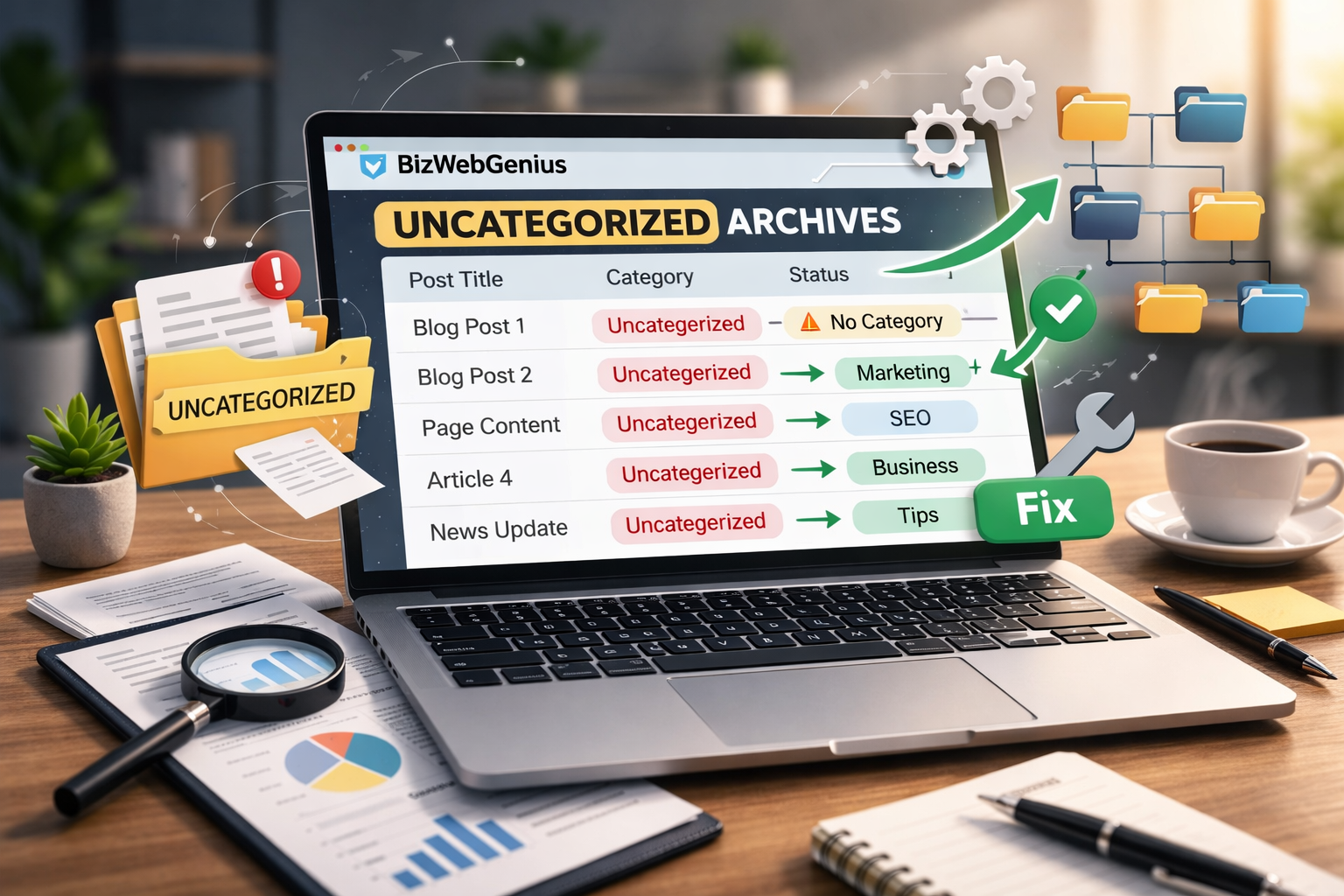
Uncategorized archives in BizWebGenius are one of those quiet site elements that rarely get attention until something feels off. Traffic dips, internal links look messy, or Google Search Console starts surfacing odd URLs you never meant to promote. At that point, “uncategorized” stops being a harmless default and becomes a real structural concern.
This isn’t a rare issue. Many content-driven sites accumulate uncategorized archives over time, especially as teams grow or workflows change. The challenge is knowing when they’re doing damage, when they’re neutral, and when they can actually serve a purpose.
Below is a grounded, experience-based look at how uncategorized archives behave in BizWebGenius, why they matter, and what to do about them without overcorrecting.
What “Uncategorized Archives” Actually Mean in BizWebGenius
In BizWebGenius, uncategorized archives usually exist because the system needs a fallback. When a post, page, or content entry isn’t assigned a defined category, it lands in an “uncategorized” bucket by default.
From a technical standpoint, this makes sense. From a content and SEO standpoint, it’s more complicated.
An uncategorized archive is often auto-generated. It collects all content lacking a proper taxonomy and presents it as an indexable archive page. Whether that page helps or hurts depends entirely on how your site is structured and how search engines interpret its role.
Why Uncategorized Archives Exist in the First Place
Uncategorized archives rarely appear because of bad intentions. More often, they’re the result of everyday realities.
- Content was published quickly without a final taxonomy check
- Categories were deleted or renamed later
- Imported content didn’t map cleanly to existing categories
- Multiple contributors followed different publishing habits
Over time, these small inconsistencies pile up. The archive becomes a catch-all that reflects workflow gaps rather than editorial intent.
That distinction matters, especially when search engines start treating those pages as meaningful sections of your site.
SEO Risks of Uncategorized Archives in BizWebGenius
Thin or Unfocused Archive Pages
Search engines expect archive pages to have a clear topical theme. Uncategorized archives usually don’t. They mix unrelated posts, pages, and updates into a single feed with no semantic consistency.
That lack of focus makes it hard for the page to rank for anything useful, while still consuming crawl budget.
Duplicate or Competing URLs
If uncategorized content is also accessible through other category paths, you may be creating multiple URLs pointing to similar content groupings. This can dilute ranking signals and confuse indexing.
In practice, Google often chooses one version to prioritize. You don’t always control which one.
Poor Internal Linking Signals
Archives influence internal linking by shaping how content clusters together. An uncategorized archive sends weak signals. It doesn’t reinforce topical authority or help search engines understand content relationships.
For sites aiming to build expertise in defined subject areas, this works against you.
UX and Editorial Downsides
SEO isn’t the only concern.
From a reader’s perspective, uncategorized archives feel accidental. Visitors don’t expect to browse an “uncategorized” section, and when they do land there, it often feels unfinished or confusing.
Editorially, it can also mask content gaps. When everything fits somewhere specific, it’s easier to see what you’re missing. Uncategorized content hides those insights.
Are There Any Benefits at All?
Surprisingly, yes—but they’re narrow and context-dependent.
Temporary Holding Area
For active editorial teams, uncategorized archives can act as a short-term staging zone. Drafts or newly published pieces sit there briefly before being properly categorized.
This only works if it’s intentional and monitored.
Technical Safety Net
From a system stability perspective, uncategorized archives prevent orphaned content. Every piece has a home, even if it’s not the right one yet.
The problem isn’t existence. It’s neglect.
When Uncategorized Archives Become a Real Problem
Uncategorized archives cross the line from neutral to harmful when:
- They’re indexable and visible to search engines
- They contain a large volume of mixed-topic content
- They persist long-term without editorial review
- They attract backlinks or internal links unintentionally
At that point, they’re no longer a fallback. They’re a competing content hub with no strategy behind it.
How BizWebGenius Handles Uncategorized Content
BizWebGenius is flexible by design, which is both a strength and a risk. It allows uncategorized content to exist quietly in the background, but it doesn’t force cleanup.
This means responsibility falls on site owners and editors. The platform won’t warn you when uncategorized archives start pulling organic traffic or being indexed heavily.
That silence is why many sites don’t notice the issue until later.
Practical Fixes for Uncategorized Archives in BizWebGenius
1. Audit Before You Act
Start by checking how many uncategorized URLs exist and whether they’re indexed. Tools like Google Search Console or a simple site search can surface this quickly.
If the archive isn’t indexed and holds minimal content, the fix can be simple.
2. Assign Meaningful Categories Retroactively
Where possible, move uncategorized content into logical, well-defined categories. This strengthens topical clusters and improves internal linking naturally.
Avoid creating categories just to empty the uncategorized bucket. That often creates a different problem.
3. Noindex the Archive When Appropriate
If the uncategorized archive serves no user-facing purpose, applying a noindex directive is often the cleanest solution.
This keeps the content accessible while preventing search engines from treating the archive as a ranking asset.
4. Redirect or Disable the Archive Page
In some cases, especially on smaller sites, it makes sense to disable the uncategorized archive entirely or redirect it to a relevant hub page.
This approach works best when uncategorized content volume is low.
5. Fix the Workflow, Not Just the Pages
Long-term, the real fix is editorial discipline. Clear publishing guidelines, required category fields, and periodic audits prevent the issue from returning.
Tools can help, but habits matter more.
Categorization Strategy: Less Is Often More
One common mistake is overengineering taxonomy after discovering uncategorized content. Dozens of overlapping categories create their own SEO and UX issues.
A tighter structure with fewer, well-defined categories tends to outperform complex hierarchies. Each category should represent a real topic users care about, not just an internal label.
Uncategorized content often highlights where simplification is needed.
How Search Engines Actually Treat Uncategorized Archives
Search engines don’t penalize uncategorized archives by default. They evaluate them like any other page.
If the archive looks thin, unfocused, or redundant, it will struggle. If it accidentally attracts links or internal prominence, it can siphon authority away from stronger sections.
That unpredictability is the risk. You’re leaving ranking behavior up to chance.
FAQ: Uncategorized Archives in BizWebGenius
Are uncategorized archives bad for SEO by default?
Not automatically. They become an issue when they’re indexable, unfocused, and compete with intentional category pages.
Should I delete uncategorized content?
Usually no. The content itself is fine. The fix is better categorization or controlling how the archive is indexed.
Is noindex enough, or should I remove the archive?
Noindex is often sufficient. Removal or redirection makes sense when the archive has no editorial or navigational value.
How often should I audit uncategorized content?
For active sites, a quarterly check is reasonable. High-volume publishers may need monthly reviews.
Can uncategorized archives ever rank well?
They can, but that’s usually accidental and not desirable. Ranking without topical clarity rarely supports long-term growth.
Uncategorized archives in BizWebGenius aren’t inherently broken. They’re a signal. When handled deliberately, they stay invisible and harmless. When ignored, they quietly erode structure, clarity, and control.
