
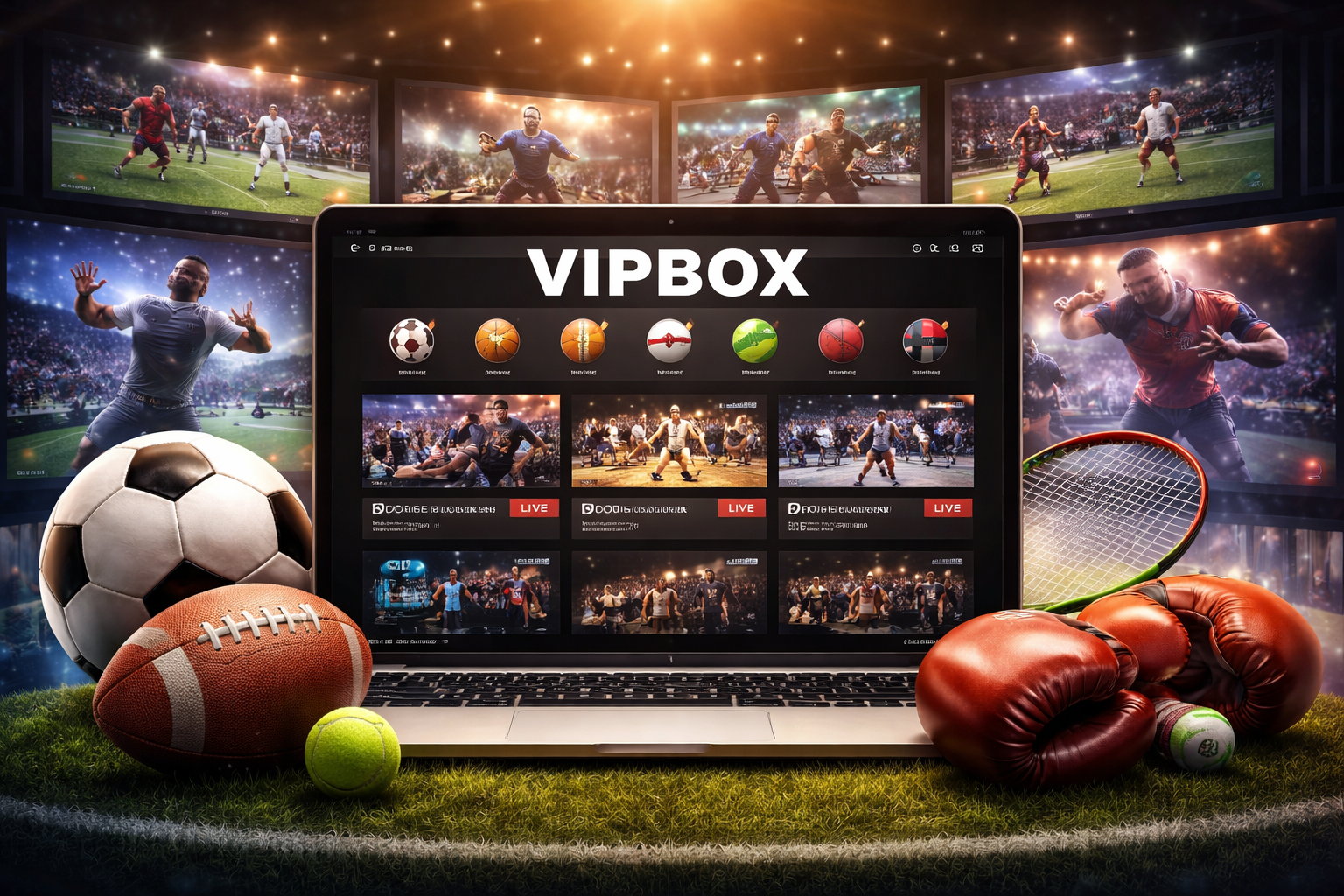
A Streaming Name That Refuses to Disappear
In the constantly shifting world of online sports streaming, certain names keep resurfacing no matter how often the internet tries to move on. VipBox Live Sports is one of those names. For years, sports fans searching for quick access to live matches—whether football, basketball, cricket, or combat sports—have stumbled across the platform during frantic pre-game searches.
The pattern is familiar. A major match is about to begin. A fan searches online for a stream, and somewhere among the results appears VipBox Live Sports. Despite frequent domain changes, mirror sites, and ongoing debates about legality, the platform continues to attract attention from viewers worldwide.
What makes VipBox so persistent? Why do fans keep looking for it when official streaming services exist? And how exactly does the platform operate in the background?
Understanding VipBox Live Sports requires looking beyond the surface and examining the habits of modern sports audiences.
Why the VipBox Live Sports Phenomenon Matters
Sports broadcasting has transformed dramatically in the past decade. Once dominated by cable television packages, the industry now revolves around fragmented streaming services, regional rights deals, and exclusive digital platforms.
In theory, this should make sports more accessible. In reality, fans often face a complicated maze.
A single season of football might require multiple subscriptions. One league may stream on a regional broadcaster, another on a premium service, and international competitions somewhere else entirely. Add geographic restrictions and rising subscription costs, and suddenly the experience becomes frustrating.
This environment is precisely where sites like VipBox Live Sports gain attention.
The platform essentially positions itself as a shortcut. Instead of navigating multiple paid services, users search for a single hub that aggregates links to live events across different sports. Whether someone wants to watch an NBA game, a boxing match, or a tennis final, VipBox attempts to gather streams in one place.
The result is predictable: whenever a major sporting event begins, search traffic for VipBox spikes again.
How VipBox Live Sports Actually Works
Aggregation Rather Than Ownership
One common misconception is that VipBox Live Sports hosts the sports streams itself. In reality, most versions of the site function primarily as an aggregator.
Instead of broadcasting games directly, VipBox typically collects links from other streaming sources and organizes them into a simple interface. Users click on the sport they want—football, basketball, baseball, motorsports, or others—and the site presents multiple streaming links connected to that event.
These links often redirect viewers to external video players hosted elsewhere on the internet.
From a technical perspective, this structure helps the platform survive repeated shutdown attempts. If one domain disappears, mirrors appear elsewhere, often using similar layouts and branding.
The Interface: Built for Speed, Not Elegance
If you’ve ever visited VipBox Live Sports, the design tells you immediately what its priorities are.
The interface is usually minimal. Large icons represent different sports categories, and upcoming matches are listed beneath them. Clicking an event leads to several streaming options, each with different quality levels or servers.
There’s little focus on polish or personalization. The experience is closer to browsing a directory than using a modern streaming service.
That simplicity is intentional. Fans typically arrive seconds before kickoff or tip-off. They aren’t looking for curated highlights or commentary feeds—they want a stream that loads quickly.
VipBox’s stripped-down structure serves that exact moment of urgency.
Mirrors and Domain Switching
Another defining characteristic of VipBox Live Sports is its constantly shifting web addresses.
Over the years, the platform has appeared under numerous domains, including variants with different country extensions or alternative spellings. These mirror sites replicate the same layout and database of links.
The reason is straightforward: copyright enforcement frequently targets unauthorized sports streaming platforms. When one domain gets blocked or removed, another version emerges elsewhere.
For users, this creates a cat-and-mouse dynamic. Fans searching for VipBox often rely on updated links circulating through forums, social media, or search engines.
The Types of Sports Streams People Look For
Part of VipBox Live Sports’ ongoing visibility comes from the sheer variety of sports it tries to cover.
Football dominates global traffic, especially during major European leagues or international tournaments. Matches from leagues like the Premier League, La Liga, and the Champions League tend to generate the highest search activity.
But VipBox also attracts viewers for events that may be harder to find on traditional channels.
Basketball fans often search for streams during NBA playoff games. Combat sports followers use platforms like VipBox during pay-per-view boxing or MMA events. Motorsport races, tennis tournaments, and even niche competitions like darts or snooker sometimes appear on the site.
In effect, VipBox attempts to mimic the idea of an all-sports broadcasting hub—something traditional television networks once provided but modern streaming has fractured.
The Real Experience for Viewers
The Appeal: Immediate Access
From a user perspective, the appeal of VipBox Live Sports is straightforward.
It promises fast access to a live event without subscription barriers. For viewers who only want to watch a single match rather than commit to a monthly service, that simplicity can be tempting.
The platform also becomes attractive in regions where official broadcasts are unavailable or delayed. International fans sometimes struggle to find legal streams for specific leagues due to geographic licensing restrictions.
VipBox positions itself as a workaround.
The Reality: Inconsistent Quality
However, the actual viewing experience often varies significantly.
Because VipBox aggregates external streams rather than hosting them directly, video quality can fluctuate. Some links may offer clear HD playback, while others suffer from buffering, lag, or sudden disconnections.
Advertising is another common issue. Many streaming pages rely on aggressive pop-up ads to generate revenue, and navigating through them can feel like part of the viewing process.
In short, the convenience of quick access comes with trade-offs.
The Legal and Ethical Debate
No discussion of VipBox Live Sports is complete without acknowledging the legal questions surrounding it.
Most major sports leagues sell exclusive broadcasting rights to networks and streaming platforms. These deals generate billions of dollars in revenue that fund teams, production, and league operations.
Unauthorized streaming platforms exist outside that system.
Because VipBox primarily aggregates third-party streams, its legal status varies depending on jurisdiction and enforcement efforts. Authorities and rights holders frequently attempt to block or remove such platforms, leading to the cycle of domain changes mentioned earlier.
For viewers, the situation often feels ambiguous. Some fans simply see VipBox as a convenient link directory. Others recognize the broader copyright implications tied to sports broadcasting.
Regardless of perspective, the legal pressure surrounding these platforms remains constant.
Why Fans Continue Searching for VipBox
Even with the risks and limitations, VipBox Live Sports keeps appearing in online searches for one simple reason: demand.
Sports audiences today face a fragmented viewing landscape. A single fan might need multiple subscriptions to follow their favorite leagues, teams, or tournaments.
That complexity drives some viewers toward alternatives that promise simplicity—even if the experience isn’t perfect.
Another factor is the culture of live sports itself. Games happen in real time, and missing them means missing the moment. When kickoff approaches and no official stream is available, fans often turn to whatever option appears fastest in search results.
VipBox lives in that exact space of urgency.
The Direction of Sports Streaming
The persistence of platforms like VipBox Live Sports highlights an interesting tension in the digital media world.
On one side are leagues and broadcasters investing heavily in official streaming platforms. Services are improving video quality, adding interactive features, and offering mobile access for global audiences.
On the other side are fans pushing for simplicity and affordability.
Some leagues have begun experimenting with direct-to-consumer streaming models, where viewers can subscribe to a single service that covers an entire competition. Others are exploring global streaming packages that reduce geographic restrictions.
If those trends continue, the appeal of unofficial aggregators could eventually decline.
But for now, the gap between what fans want and what the market provides still exists.
The Search That Keeps Returning
VipBox Live Sports has survived for years not because it offers a perfect product, but because it fills a gap in the online sports ecosystem.
Fans searching for quick access to live events often encounter the platform when official options feel too complicated, too expensive, or simply unavailable in their region.
The site’s simple interface, wide range of sports categories, and constant domain reinventions have allowed it to remain visible despite ongoing enforcement efforts.
At the same time, the viewing experience can be inconsistent, and the legal questions surrounding unofficial streams remain unresolved.
Conclusion
VipBox Live Sports represents a familiar pattern in digital media: when audiences struggle to access the content they want, alternative platforms inevitably appear to meet that demand.By acting as an aggregator of live sports streams, VipBox has positioned itself as a quick-access hub for viewers searching for matches across multiple leagues and competitions. Its simple interface and wide sports coverage keep it circulating in online searches, especially during major events.However, the platform’s reliance on external streams leads to unpredictable video quality, heavy advertising, and ongoing legal scrutiny. These factors make it far from a stable long-term solution for sports fans.The continued popularity of VipBox ultimately says more about the state of sports broadcasting than about the site itself. As long as streaming rights remain fragmented and access varies by region, platforms that promise fast, centralized viewing will continue to attract attention. Whether VipBox remains a recognizable name in the future will depend largely on how the sports streaming industry evolves—and whether official services can finally match the simplicity that fans have been searching for all along.
